PedesTirants
Poor bicycles. It seems our increasingly unlivable metropolis has an ingrained hatred of all things non-motorised. Regardless of efforts to open spaces for bicycles, city folk have a seemingly low tolerance for them. Just try riding on a congested street and you'll immediately know what I mean. If people don't honk or hurl things at you from their car windows, you will be in imminent danger of getting run over.
You will often decide to ride on sidewalks instead. This is illegal. Everyone does this. (I even got pestered by a policeman in Japan once to get off the street and ride on the sidewalk. That, however, is another story).
Yet the possibility of running someone over is high, and maneouvring between disgruntled pedestrians can be dangerous for the biker. Hence someone came up with the brilliant idea of building bicycle lanes. Separating cars, bikes and joggers, all neatly contained in their own domains: cars on the road, bikes on the lanes and joggers in the park. What a great idea.
Santiago has a good handful of bicycle lanes, variable in quality and usability, mostly in Providencia, one of the largest and wealthiest buroughs. This is also the burough with the largest quantity of parks and green areas in the city. For almost 5km the bicycle lane runs parallel to a park. Nothing breathtaking, just a little sand path with lawns and a few haphazard trees, smack in the middle of a large avenue. Enough, you would think, for cars, bicycles, cars and pedestrians to get along peachily. Yet here is where theory crashes headlong onto messy reality.
Today I almost ran over a little kid, who was playing smack in the middle of the bicycle lane. His mother walked a few steps ahead, and instead of telling him to get out of the way, she just called him over. This after I firmly (though politely) said "coming through, please be careful." Perhaps I could have voiced my opinion on how retarded it is to walk on lanes indented for vehicles moving at higher speeds than nature intended us for in the first place. Opting for peace instead, I didn't. But the thought stayed in my mind.
Poor bicycles. It seems as though they are not only scorned by cars -the unquestioned owners of the concrete mess that is Santiago-, but also by pedestrians reclaiming walking rights on would-be sidewalks. Is walking on bicycle-only lanes their way of getting back at us for appropriating their pedestiran-only sidewalks in the past?
Later in the evening, riding back on the same lane, a middle-aged couple strolled happily, hand in hand, slowly, again smack in the middle of the road. This time, however, I did not have to say anything. Riding from behind, a young man on a bicycle whooshed past them shouting "this is intended for biycles!" The reaction from the older man was a typical Chilean rooster ruffle - "come back and say it to my face!" Of course, by then, the younger man was way ahead.
Again, my ill-celebrated necessity of looking for confrontation tapped me on the shoulder. Sitting by the side of the road, I thought of saying something along the lines of "he's right, you know." After all, there was a whole park to walk on. The clear sky and beautiful dusk, however, saw to it I remained tonguetied.
For the universe is as wise as it is ruthless. Let the man show off his feathers for his woman. Let the bicycle dude keep having a bad day. Reverse their roles and you will probably get the same reactions; such is the folly of our irrational humanity. And sadly, though it could have been prevented, neither tantrums nor tousled feathers will stop the coming of the day when someone gets run over.
The underdog strikes back. The oppressed becomes the oppressor. Maybe on that day, bicycles will finally get some Respect.
Tuesday, February 06, 2007


Thursday, April 27, 2006
Las Payas Elegantes
El lujo añejo del rojo mantel
a cuartel del desdeño del reojo
el cerrojo de los bienes ilusorios
sin crin ni jolgorios de aves
sin sus mares y sin mortuorios
El oro vive solo ese momento
un esperpento sin voz ni coro
que se olvida en un segundo
y el fin del mundo es el vacío
con solo hastío del más profundo
Y el cristal frío no se compara
con la fresca agua de río
y me rio como un crío.
Alcuza, ensaladera, plato 'e fondo
espejo redondo y pimentera
La que entera no cunde ni salpica
lluvia rica, olmo y pino
ni el dulce trino de la golondrina
con su canción, más fina que lo fino
Sólo naturaleza, verde desbordante
que me desplante en mi entereza
que me cueza y que me abrase
que me case en frac de hoja
y nube roja, atardecer monumental
calzando el estival que del frío me despoja.
Y el cristal frío no se compara
con la fresca agua de río
y me rio como un crío.
Tuesday, February 21, 2006
Airport Angst |
Tuesday, February 14, 2006
To my One reader
Yes, you, the deranged loon with too much time on his/her hands. I haven't updated for donkey's years. I know. I've been distracted, and probably too drunk and stoned to write anything coherent. Not that my usual stuff is any better, but at the moment my thinking skills are little better than that of a cactus.
So go do something useful with your time. Go to www.answers.com and educate yourself in random trivia knowledge. Play the Wikipedia game (choose an obscure subject, click on random article and see how many clicks it takes you to get to your subject of choice). Surf for some more porn. Alternatively, call somoene up and have a real human conversation. Then, when you get bored and cranky and remember why it is you log on to the internet so much, come back here. Hopefully I will have updated by then.
Friday, January 27, 2006
Thirty-three Years of Vengeance
*He's the most highly honoured military officer in the whole southern cone - every medal symbolises a bank account in Switzerland.
 “Many years later, in front of the firing squad, Colonel Aureliano Buendia would remember that distant afternoon when his father had taken him to see ice.”
Garcia Marquez’s famous opening lines from his acclaimed novel, One Hundred Years of Solitude, set the score for an unending cycle of violence spread out between irregular bouts of past, present and future in a rural Latin American fantasyland.
Sixteen years after the cycle of violence that consumed Chile between 1973 and 1990, the past has also come back to haunt Chile’s ex-dictator Augusto Pinochet. This time, however, the memories are far less nostalgic. As criminal courts find increasing evidence for the arrest of one of South America's bloodiest ex-leaders and his family, questions arise about the mood of the procedures. Can the downfall of the Pinochet clan be regarded as a case of divine retribution? Could it be that justice is being served as a side dish to vengeance, or is it the other way round?
To understand this situation we must look back at the history of the procedures from the beginning.
After a brief detention in England back in 1998, the aged General was for the first time charged for the atrocities committed during his regime. It was a shocking event for the “Pinochetistas” of the Chilean right wing and the General himself. The tired cold war arguments and self-made legitimacy of their illegal government had successfully blinded people at home (“by reason or force,” like the suspiciously authoritarian motto in the national coat of arms), but failed to convince the rest of the world, who still looked askance on the dictatorship’s history of torture, censorship and human rights abuses.
The General had thought himself untouchable, but proof of the contrary seemed to sprout everywhere. Glimpsing a window of opportunity during a routine medical visit by Pinochet to the UK, it was Spanish judge Baltazar Garzon who cast the first stone. He ordered the immediate arrest and detention of the ex-dictator in the hopes of making him stand trial in Spain. Before anyone could say “bloody coup”, Pinochet was under house arrest in a lavish northwest London mansion, facing prompt extradition into Garzon’s hands.
The Chilean right wing was quick to respond. Shifty rhetoric about national sovereignty flooded the local press. “No one can try Pinochet but Chileans themselves,” cried the powerful allies of the General, as if to say “this has nothing to do with you.” Populist images of past European imperialism were conjured, while Congress reactionaries and powerful industrialist groups bullied the government to back up the petition for Pinochet’s release.
A few lost souls even flew to England to protest with gaudy handmade banners in front of the Houses of Parliament, about twenty odd people shivering in the cold of winter, chanting in thick Chilean Spanish dialect. It was a preposterous sight. Busy Londoners, in their typically English manner, pretended not to notice the quaint protesters, swiftly quickening their pace as they strode by.
After much lobbying by Tory ex-Prime Minister Margaret Thatcher –herself a good friend of the General, dating back from the Reagan days- and shady medical excuses concocted by sympathetic doctors (what would later become a staple of the defense in the Pinochet trials), the British government gave in to external pressure and, not without a canned sigh of relief, sent Pinochet back on the first plane home.
Old and sickly, Pinochet left the UK sporting a drop-dead complexion, hunched on a wheelchair pushed by grieving relatives. As soon as he stepped off the plane, however, he seemed to recover his youthful vitality almost instantaneously. He sprang up to greet the crowd of suits at the airport, beaming with cocky pride on what he thought was literally a safe return home.
Photos of Pinochet’s miraculously regained health circled the globe to the shock of the liberal media. It was an outrage –the defense had blatantly lied about the General’s condition. Meanwhile, the right wing’s fiery nationalist oratory began to slowly shift from “let the Chilean courts handle this” to a conveniently Christian “forgive and forget” sermon.
Voices of dissent had previously predicted that a proper trial in Chilean territory would be impossible. The democratic institutions were still coming to terms with remaining pockets of military authority, and the right wing lobbies were too powerful. Most importantly, however, is that most Chileans –terrorised for decades under the dictatorship’s bloody rule- found it hard to believe that Pinochet could ever stand trial. Even almost ten years after the end of the dictatorship, fear of reprisals lingered and belief in the judicial power, so abused by the military in the past, was scant.
Nevertheless, the General’s detention in London had set a historical precedent, enough to start the snowball of events that would ultimately lead to his downfall. Although human rights trials against military officers had been set in motion since the return to democracy in 1990, it was the first time anyone had frontally attacked the ex-leader. Judge Garzon had shown the Chilean public that Pinochet was not impervious to international law. He was urged to continue the procedure on the General and the large Chilean exile community called for more international pressure.
At home, as the fear accumulated for two decades gradually disappeared, more and more voices started calling for justice and the due criminal processing of Pinochet. Soon, the government reacted and, after much battling with the conservative elements in Congress, managed to finally strip the General off his self-appointed senator-for-life status. This meant he could now stand trial like any other citizen.
In the light of this sudden social outburst, the General’s lawyers were faced with ever more predicaments. A mass grave with the remnants of several political detainees was found, and ex-officers started testifying against him during their own trials. As increasing evidence suggested Pinochet’s direct involvement in several campaigns of planned genocide, things started turning –as a picturesque Chilean expression goes- ant-coloured for the old General. Their best bet was to press on the claims of Pinochet’s illness, making him default from criminal procedures and therefore putting the trials on hold indefinitely.
Repeated medical exams showed vague evidence of real illness, but thanks to Pinochet’s advanced age his doctors managed to find a loophole in abstract mental diagnoses. Thus, in 1999, the General was officially charged with senile dementia. The once feared leader of the formidable Military Junta, the man who had once claimed that in Chile not a leaf moved without him knowing, had been reduced to the status of a ranting old coot. Unfortunately, this also gave the defense leeway for protecting their client on medical grounds.
The few liberal publications available at the time welcomed this turn of events with marked irreverence. Popular newspapers ran headlines such as “Esta Loco!” (he’s insane!) and “Loco Por Ti” (crazy for you). Soon, jokes about the incontinent, rambling General had become a staple in universities and left-wing circles. National catharsis had never felt so good.
Still, the human rights trials had yet to bear fruit. Pinochet’s lawyers managed to maintain a game of hide-and-seek with the justice system for several years, where the General would always suspiciously suffer from mild strokes or health complications before a court hearing. Given the cunningness of his lawyers and Pinochet’s old age, it was feared that he would die before ever facing trial.
Talk of the general’s imminent demise swamped the media. The soon-to-be presidential candidate for the Socialist party, Michelle Bachellet (famous for losing her father to the dictatorship), was even asked at an interview if she would go to Pinochet’s funeral were she elected president. Such talk shocked the right wing, who considered “of bad taste” to refer to the ex-dictator’s death while he was still alive. No one else seemed to mind.
But with presidential elections just around the corner, the liberal agenda had to be delivered. The families of the victims claimed for justice, and the Pinochet trial represented a cornerstone in bringing back legitimacy to democratic institutions, especially the Supreme Court; they would not rest until Pinochet could be done for something –anything.
As soon as his impunity started becoming less and less evident, old friends started turning his back on the General. He was now a dangerous man and any personal implications with the dictatorship and its former leaders meant trouble. The biggest shock came when in 2003 the Commander-in-Chief of the armed forces aired a public apology for the events of 1973 under the historical words: “never again”. But it was more than a mere apology, for behind the “never again” lay the insinuation of a sullen “no more” to Pinochet.
The final blow was delivered in 2004. Pinochet, still thinking he was immune to court procedures (some would say, a product of his alleged dementia) decided to attend a talk show in Miami. Acting meek and convalescent in Chile, he appeared lucid and healthy on American TV. Most of all, he talked with particular venom about the courts, who in his mind had not taken into consideration his role as a national saviour. This last act of foolish arrogance delivered a coup-de-grace to his already shady mental illness allegations, and the court finally had enough evidence to strip him off his medical immunity.
Around the same time, an investigation led to a series of hidden accounts in the US-based Riggs bank, belonging to Pinochet and his family, each one containing several million dollars. The Untouchable one had perversely fulfilled his own prophecy: just like Al Capone decades before, Pinochet was now accountable for fraud and tax evasion.
The repercussions in Chile were momentous. Until then, supporters of the dictatorship had grounded its legitimacy on economic arguments and the transparency of the neo-liberal economic model impulsed by Pinochet’s cronies. Unlike other South American dictators, Pinochet had been thought by many of his supporters as incorruptible. Yet here was evidence of what the opposition had suspected all along: the General, his family and friends had systematically ransacked the public treasury, altering official documents and bending the laws to their own benefit.
The scandal reached colossal proportions, not without certain skepticism from the liberal media. It had taken almost six years to try Pinochet for genocide charges, but the courts had been swift in tackling him for his financial misdeeds. Many writers and journalists lamented this gloomy edge of Chilean democracy, where apparently money was given more importance than human rights.
The right wing, on the other hand, accused a campaign of smears against Pinochet and questioned the lawfulness of the trials. By that time, however, the General’s reputation was at an all time low, and the proof of his crimes was too solid to dismiss as mere vengeance. There was, however, a quiet feeling of accomplishment in seeing the ex-leader finally go down. Dusty tax books and balance sheets were doing what muddy ribcages and cracked skulls couldn’t do for years.
Pinochet’s eldest son was swiftly put in prison for massive tax abuse, while his wife Lucia was charged with fraud and forgery of legal documents. The plot kept thickening to the delight of the General’s enemies. At the time this article was written the Pinochet family had been ordered to pay 3500 million pesos (about 8 million dollars) as temporary bail, and Pinochet’s eldest daughter was on the run from the law, seeking asylum in the US. She was stopped by Interpol, who reportedly impeded her entry into the North American country.
***
"Families condemned to One Hundred Years of Solitude do not have a second chance on this earth." Thus are the final words of Garcia Marquez’s novel. The cycle of destruction has winded down, ready to cease forever and dissolve into oblivion along with the fantasyland where the story takes place.
Many years later, people will still look back at the time when the sole mention of General Pinochet inspired bone-chilling terror in their hearts. While the firing squad has been all but replaced by financial auditors armed with calculators, the memories –good for some, bad for most- will never go away completely.
Violence and social unrest – they stand at the heart of Latin America’s curse. But the cycle has to stop somewhere, or at least pause before its course reverses. Divine retribution might sound rightful in the ears of what is a largely Catholic country, but there is nothing supernatural about the state of law. Vengeance alone cannot explain the Pinochet trials; the delay of the investigations and the legal battles are perhaps cumbersome effects of their legitimacy. They demonstrate that the days of the firing squad and show trials are finally over.
Yet vengeance still remains in the hearts of many, for it would be irresponsible to forgive and forget the crimes of the dictatorship. Coming to terms with the past is paving the way for a hopeful future. The trials may go on forever. It is, however, in everyone's interest that they do so, because families who condemn their fellow man to twenty years of crime and murder do not have a second chance on this earth.
Thursday, December 29, 2005
This is not a Happy Place
(As published in http://www.theforeigner-japan.com/archives/200601/denyingshame.htm).
 During the winter Tokyo becomes a single mass of grey upon grey. Cold weather sets in, the scant greenery subsides, and the few large parks seem unable to contain the invasion of concrete all around. Far away from the neon-glitz of downtown Shibuya, suburbs and mid-points remain quiet in their anonymity. Some less anonymous places have other reasons for silence.
Straight from the sixth exit of Kudanshita station lies the infamous Yasukuni shrine. A huge promenade and two looming Torii gates lead the way into this, the resting place of the souls of the Japanese Imperial Army. On every side, blackened cherry blossom trees sprout leafless like menacing tentacles, exacerbating the dark colours of the main shrine. A pristine white cloth with artful patterns hangs on the front, giving the place striking contrasts of imperial grandeur. Outside, neo-fascists bow reverentially while sombre temple girls carry on with their duties. The tone is grave and the execution martial. This is not a happy place.
Once the hub of religious imperial frenzy, Yasukuni is both the lovechild and the lover of Japan's extreme right. Its name literally means "peaceful country," but it would be wrong to assume Yasukuni is a monument to pacifism. Quite the opposite, Yasukuni is a place of reverence to the heroic feats of Japan during every war since the Meiji restoration, when the shrine was founded. This includes Japan's invasion of several Asian countries and World War II. Not only are the names of over 2.5 million soldiers revered here, but also the souls of Japan's biggest war criminals are supposed to rest within its dark halls. These include 14 Class A criminals, such as former Prime Minister Hideki Tojo and general Iwane Matsui, one of the people formally responsible for the Nanjing massacre (aka the "Rape of Nanking") in 1937. The concept of peace impulsed by Yasukuni, in short, is the kind exercised through a gun barrel.
 On one of the sides of the main building there is a large box with a number of leaflets about the shrine and the many organisations that support it. In one of them, a peace dove explains how the War was necessary to maintain Japan's independence, to make it a truly peaceful country and spread its peace through Asia. Another leaflet tells how only by fighting in Asia could the continent be rid of the "white menace." Yet another leaflet advertises a documentary which tells the "true" story of the war, from Japan's altruistic pan-Asian intentions to the unfairness of the Tokyo War Trials. "Show this to your children and grandchildren," says the advert, "to raise their awareness and patriotsm." Near the dark Torii gate, a girl no more than 10 years old bowed at almost 90 degrees to the altar in the shrine.
Yet, for all its conspicuous propaganda, Yasukuni itself is not the blatant monument to imperialism one wishes it to be (as it would be much easier to ignore that way). It is not a shrine built on revisionism, but rather the latter follows as a consequence of the nature of the place. Yasukuni is a memorial which caters to feelings, not history. The feelings in question are those of "patriots" and their families. And because this is ultimately a religious site, propaganda is shrouded under the guise of morality, a mixture of culture, piety and pride, based on honour, heroism and suffering.
The suffering of the soldiers' families - pointed out repeatedly in several inscriptions around the shrine - is the kind of moral detergent used to review history from the point of view of the aggressor as a victim. It is not unlike the constant references to Hiroshima and Nagasaki one finds in Japanese history books, to show that neither side is ever free of guilt. Albeit a sound argument, it is one that requires objectivity and a large degree of introspection, too. The lack of either in Japanese post-war rhetoric is enough to write off Yasukuni's imperialist arguments of Japan's "just" war.
And yet, the fact remains that human lives were lost, and suffering - though far less brutal than in the colonies - was as much a reality in Japan as it was elsewhere. This is the stepping stone that the Yasukuni establishment uses and exploits, by justifying the war through vicarious suffering. Their mission is not to give an objective account of history, but to describe it in moral/religious terms. Thus, sending millions of children to their deaths was not only necessary: it was heroic, pure and borne out of duty. In the Yasukuni mindset, the soldiers are innocent because their intentions were pure, laying their lives for their country trying to create a utopic world. Nazism was not too different. Yet we do not find memorials to fallen SS officers in Germany these days.
Culturally conditioned pride -"face"- plays a big role in this. Denying the souls the purity of their ideals would bring shame upon the suffering of the families who have already paid the price of defeat. It's a particularly diabolical argument: that of sustaining the sanctitude of human life by showing complete disregard for it at the same time. And yet reason might not be enough to deal with pride. For what good are arguments to assuage the pain of an aching mother who has just lost her son?
 On emotional grounds, then, Yasukuni could be justified at an individual level. The problems happen when these cases are brought into the political arena. When the Prime Minister visits the shrine in his capacity as such, he is representing an individual emotional matter as a collective national issue. It is not the suffering of a family anymore, but the suffering of the Japanese nation as a family. The great lie of nationalism is fed through individual pain. This, at the same time, gives itself to further political machinations where purity of action through following orders becomes an excuse for bloody deeds, putting ideological principles on top of life and civility. When history is explored in religious terms it makes way for political agendas. In Yasukuni's case, the agenda is to legitimise a particularly ruthless and self-righteous -but more to the case, outdated- brand of authoritarianism.
 On emotional grounds, then, Yasukuni could be justified at an individual level. The problems happen when these cases are brought into the political arena. When the Prime Minister visits the shrine in his capacity as such, he is representing an individual emotional matter as a collective national issue. It is not the suffering of a family anymore, but the suffering of the Japanese nation as a family. The great lie of nationalism is fed through individual pain. This, at the same time, gives itself to further political machinations where purity of action through following orders becomes an excuse for bloody deeds, putting ideological principles on top of life and civility. When history is explored in religious terms it makes way for political agendas. In Yasukuni's case, the agenda is to legitimise a particularly ruthless and self-righteous -but more to the case, outdated- brand of authoritarianism.
As the tourists around me took pictures of the shrine, I overheard a conversation between an American woman, an expat living in Japan, and her visiting friends. She was explaining the controversial history of Yasukuni to her guests, when she said something that caught my attention: "Many war criminals are honoured in here, yet I feel we might not be too different in the US. After all, our war criminals are still alive and in office." Here was the introspection needed to understand places like Yasukuni, the same argument that the shrine in all its monumental pomposity lacked. It was, ironically, brought forth by the blatant attempts all around us to obscure history. Inadvertently, Yasukuni had become an advert for values opposite to those it exalted.
The cold winter sun shone through the leafless branches, but from where I stood the black Torii gates suddenly didn't look so big and menacing anymore.
Sunday, December 18, 2005
...Y Mostraron la Hilacha
“Hilacha” is a quirky Spanish word to describe a loose thread in a piece of clothing and “mostrar la hilacha” (lit. “to show the loose thread”) is a widely used colloquialism. In the same way a loose thread on an expensive shirt undermines its quality, “mostrar la hilacha” is to find a blemish on an otherwise flawless image. Its meaning is close to the English “to show one’s true colours,” and its use is not uncommon in the political arena.
“Hilacha” is a quirky Spanish word to describe a loose thread in a piece of clothing and “mostrar la hilacha” (lit. “to show the loose thread”) is a widely used colloquialism. In the same way a loose thread on an expensive shirt undermines its quality, “mostrar la hilacha” is to find a blemish on an otherwise flawless image. Its meaning is close to the English “to show one’s true colours,” and its use is not uncommon in the political arena.
As predicted, Michelle Bachelet won nearly 46% of the votes (4% under the 50+1 needed for election) on last Sunday’s election. Both right-wing contenders, Sebastián Piñera and Joaquín Lavín, followed with 25% and 23% respectively and Tomas Hirsch with 5%. A run-off has been set for January 15th between Bachelet and Piñera, and as the final countdown begins both coalitions have already started showing their teeth.
The first incident happened soon after the election, when members of Bachelet’s team accused Piñera of receiving phone calls from his party offering bribes. Bachelet, standing by her constituents, accused Piñera of using an (sic) “age old tactic of the right wing, which is to offer money and presents in exchange for political support.” She was, of course, referring to the well-known practice of cohecho, punishable by law. Piñera swiftly denied the accusations and in turn accused Bachelet’s coalition of spreading false rumours for electoral purposes. Bachelet proceeded to clarify it was not members of her party who were offered bribes, but a number of citizens in poorer sectors. In the light of this sudden change of rhetoric, Piñera questioned Bachelet’s honour and credibility in public.
Soon after, Piñera’s own moral authority was challenged when dirty episodes of his political career were brought to light, such as a telephone-tapping scandal with UDI senator Evelyn Matthei in the early 1990s and the dubious selling of stock for the then newly privatised electricity company, Endesa.
On the side of the losers, former UDI candidate Joaquín Lavín announced his “intimate friendship” with Piñera –even after months of gritty confrontation with the RN candidate-, and Tomas Hirsch urged his supporters to annul their votes on the upcoming run-off. While Hirsch’s original candidature was received coldly by most left-wing parties because it fragmented the bloc, his comments alienated the left even further. The communists, in a turn of events, decided not to back Hirsch and offered their support to Bachelet if she complied with a set of five demands, one of them issuing the abolishment of the binomial electoral system established during the dictatorship. Bachelet’s team, wary of a sudden upsurge in right-wing votes, agreed to these demands and urged Piñera to establish his position on the subject through a televised debate.
Piñera is now faced with the dilemma of the binomial issue. While his own party (RN) is not in favour of the system, half of his voters (the 23% who supported Lavín) and the authoritarian UDI do not want it to change. Mario Puccio, spokesperson for the current government, has referred to Piñera as “a victim of the extreme right,” while Piñera himself claims the debate on the binomial system is just another “political manoeuvre.”
The debate is scheduled soon after New Year, and teams on either side are busy trying to complicate matters further in search for additional votes. Power politics are never silky, and right now there seem to be enough hilachas to reel a few spools.
Sunday, December 11, 2005
Deck the Polls (with boughs of folly)
 Joaquin Lavin
 Sebastian Piñera
This Sunday at approximately 10pm (Monday morning for us living in “the future”), the short-term destiny of yet another small and random country will be decided. It will not be a significant event in world history, nor will it change the fate of humanity at large. For the most part, it will only provide some interesting trivia at dinner parties and a chance to show off in front of that special someone. For some, however, it will mean much more. At that time, Chile in all its anorexic glory will welcome a new president with open hands (and possibly the customary Molotov cocktails provided by our dear lumpen).
I would assume most readers to my humble blog are fairly clueless about Chilean politics, much in the same way I am clueless about local politics in, say, Gambia. Perhaps some will have heard about the infamous General Pinochet. Others might be aware of the 9/11 1973 coup-de-etat, and fewer still might know about the short-term effect of President Frei’s land-reform policies in rural communities at the pinnacle of radicalism in the 1960s. The fact remains that not many people know about modern Chilean politics, with the possible exception of crazed poncho-garbed Latin American Studies graduates (who always specialise in Peru or Colombia anyway).
In an effort to educate the masses and make sure that you, too, can bore others to tears (including that girl you wanted to impress), here’s a little run through of the main contenders for this year’s tricolour sash:
 Michelle Bachellet
Political analysts, statisticians and other wizards agree that Ms. Bachellet has the highest chances of winning the first electoral round. A member of the “concertación,” an alliance of left-wing parties, including the Christian Democrats (DC) and the Socialist Party (PS), she is widely supported by many sectors of the population. Her widespread popularity is due to two main factors: 1) She is the daughter of a famous air-force official assassinated during the dictatorship and 2) she is the first woman to ever run for president in Chile. Her past closeness to tragedy, ‘simple middle-class mother’ public image and progressive views bring her closer to the sectors who suffered the most during Pinochet’s reign of terror (except, perhaps, for communist militants). Furthermore, the fact that she is female appeals to great masses of downtrodden women and sexual minorities in what is a particularly chauvinistic and conservative society. Some maintain that a skirt in La Moneda Palace would upset traditional social and political mores in a country blighted by conflicts related to codpiece bulk.
Points in Favour: She will continue with the work of the current government, making sure that several social policies –especially in regard to health, transport and education- escape private interests, and help to address the unfair distribution of income.
Points Against: La Moneda will be closed for a week each month, when the President will be unavailable to address “touchy” subjects. Expect laws ensuring leaves of absence for feminine reasons. (Conversely, it is estimated this will produce a welcome boom in the chocolate and romantic novel industries).
 Joaquin Lavin
The George Bush of Chile, Joaquin Lavin is a devout Catholic and an ardent Opus Dei militant. In fact, his religious convictions are so strong he resembles the closest thing to a South American Ayatollah. As could be expected, he is also a staunch conservative and a right-wing nutter (some would say, a few rigatoni short of Il Duce). He is a member of the Union Democrata Independiente (UDI), conformed by wealthy industrialists and “Pinochetistas” (pro-dictatorship). In short, it's a party with as much social vision as Bush’s kleptocracy in the US. While many consider them to be an anachronism in Chilean politics, the girth of their financial muscle and flagrant nepotism are overwhelming.
A former candidate in the last presidential election, Lavin has been pushing for a place in La Moneda for what seems an eternity. Needless to say, everyone is tired of his populist rants and demagogical fascism, as well as his personal history of Pinochetismo (which he now denies). Although he came to a close second place 6 years ago, his popularity has been dwindling constantly since then, especially after the Pinochet-Riggs case last year. Sudden humiliation and sullen desperation have seen him unleash his venomous tongue repeatedly against the other candidates in public.
Points in Favour: He is a good Catholic, and believes in helping the needy.
Points Against: In Lavin’s utopia, the rich hold sumptuous charity banquets of pheasant and game to give the less-fortunate cans of tuna in brine. Heathens get gizzard salad.
 Sebastian Piñera
A candidate for the Renovacion Nacional (RN) party, Piñera belongs to a different strand of conservatism than his counterpart Lavin. Millionaire extraordinaire, Piñera has the financial backing of the industrialists and enjoys the popular benefits of an anti-Pinochetista. To many, he is the modern incarnation of former President Alessandri, a very popular conservative in the 1920s and 30s, who successfully addressed many social issues with a mix of private and public policies.
Early this year Piñera stirred the ranks of the right wing by running for election, thus bringing an end to the “Alianza por Chile,” an alliance between the RN and UDI parties who originally supported Lavin as the only right-wing candidate. Since then, relations with his political adversaries have been difficult, and many of his former friends have turned their backs on him. In spite of this, polls have shown his support grow in the last few months, even surpassing Lavin at times.
Points in Favour: He is a good conservative. If Piñera gets to La Moneda, economic policies turned to privatization of public enterprises may increase their value and efficiency. He is also a famed environmentalist, and thus massive tracts of land would privatised and protected from illegal loggers and industrial interests.
Points Against: He is a good, rich conservative. His policies would fail to address the single biggest problem in Chilean society, which is the unfair distribution of income. His environmental policies could also backfire under the pressure of multinationals, free-trade agreements and industrialist lobbying from his close circle of friends.
 Tomas Hirsch
Hirsch is the man no one really knows, the humanist rebel who has been present in the past three elections and failed to get more than a tiny fraction of the votes. He is a member of a left-wing alliance between the humanists (his own party), radicals (PR) and communists (PC). His popularity has increased somewhat in the last few months, especially after the death of the communist leader, Gladys Marin. His support is discrete, but he could well be a worthy adversary in the future. Or so it has been predicted for the last 15 years.
Points in Favour: He is the right on candidate supported by hippies, environmentalists, artsy people and liberal lefties in general.
Points Against: Unfortunately for him, these are the same people who are usually too stoned to vote in the elections.
Points in Favour: He is the right on candidate supported by hippies, environmentalists, artsy people and liberal lefties in general.
Points Against: Unfortunately for him, these are the same people who are usually too stoned to vote in the elections.
And that’s it. I hope you have been enlightened in your understanding of the sordid world of Chilean politics. Good luck in your dinner parties!
Wednesday, December 07, 2005
This is Not a Poem, Just Misplaced Haphazard Prose
(and purposefully obscure, ungrammatical Japanese)
The air gets colder
with each passing minute;
My red fleece socks,
They tell me:
Going out every night
is not more an option
than sucking ice
from frozen pipes.
冷たくなる一方
空気が、一分毎
赤い靴下は
管の氷吸い
同様、毎晩
出かけるはイカン。
My bicycle, alone
In the shed at night
Yearns for exercise.
I tell her:
Why face searing blasts
of icy wind on mine,
if I can crawl under a blanket
and become a junkie
for paraffin fumes?
一人ぼっちチャリ
真夜中に宿で
俺は慰める
風が顔を打つ
布団にホッとし
灯油を吸いつづ。
What was a picnic
A minute from now
Is a steaming nabe;
It tells me:
The rugged park
swapped its freedom
for the constrained softness
of the living room.
以前は夏花見
以後は鍋になる
耳に囁いた
公園が自由
居間の柔らかさ
に変身をした。
Drowsiness fills the void
Left by escaping heat;
Old master at my table
Tells me:
Food, warmth, inactivity,
the age-old highlights
of the winter season;
I’ll enjoy them
one yawn at a time.
寝欲が凝縮
暑さが出ながら
机に老師が
食(しょく)、暑(しょ)、動かずの
寒節の特徴
一方的に取れ。
Monday, December 05, 2005
The OL
Miss Ikeda always sat at the bottom end of the small office space, a sort of glorified eikaiwa I used to work for some time ago. Apart from the usual language classes, the job involved translating and editing documents in either hypertechnical Japanese or incomprehensible English, which I had to puzzle over daily. Since the place was small, only a handful of people worked there: four foreigners and four Japanese staff members. Ikeda-san was one of the latter.
Though not an unattractive woman, her shyness often seemed in direct proportion to the generous size of her waist. Quiet and diligent, she would usually come in early and stay until everyone else had gone home, always doing something or other for the boss on her computer. Unfortunately, her meekness and passive nature also made Ikeda-san a usual target for the latter's ego-crushing torments.
The office was owned by two partners, a man and a woman whom my friends and I jokingly dubbed "the Doomsday Duo." The top boss, "Ming the Merciless," and his right hand, "Yubaba" (in allusion to the wicked witch in a cartoon film) were every bit as bad as their nicknames suggested, little more than an overgrown schoolyard bully and his baboonlike stooge.
For one, the main boss was a control freak. At the end of every week we would all be rounded up for what they called a "yuurei," a made-up word meaning "circle of friends" (to me it always sounded more like an identical Japanese word which means "spectre"). The reason for doing it, the bosses said, was to share our experiences and relay to each other our opinions, the things we had learnt in the past week and to voice any complaints that we might have. In reality, the meeting consisted in telling the bosses what exactly we had done that past week, what we were up to now and what we would do afterward - and woe betide anyone who had a real observation or complaint, for they would be hammered down with the same diabolical zeal a hammer beats a loose nail.
These fabled meetings would sometimes be followed up by individual demoralising sessions. The bosses had a peculiar understanding of the concept "motivation," in the same way Gestapo officials "motivated" their victims to talk. Special care was taken into choosing a monthly target for surprise scoldings. Any mistakes, from spilling tea to being 3 minutes late, were written down and mounted up, then fired at us like big black bullets of shame. They always happened in the same way: the boss would say "I need to have a word with you, meet me downstairs," and everyone in the office would flinch. Desperate gazes of support crossed each other, and as soon as the target was identified, sighs of canned relief replaced them. Needless to say, Ikeda-san was a favourite target for these sessions, even in spite of her usual dilligence.
The secretary, a slender woman in expensive make-up and provocative cleavages, sat a few desks away from Ikeda-san. She was in charge of greeting customers and meeting clients, while Ikeda was in charge almost exclusively of the phone. Her job did not involve much socialising, and her biggest client was the computer screen in front of her. She seemed happy enough with this situation, however, and had in a few years acquired enough experience and mastered enough computing skills to do several kinds of jobs elsewhere. But the question of leaving the company never entered her mind. "What would I do?" she'd sigh before going back to her endless typing.
A few months down the line, things began getting worse for me. The demoralising sessions had increased, as had the overtime and my misery. By this time a vicious circle had been created, where the bullying from the bosses would only tap into my inner brat. I was not ready to give up my individual rights for the sake of the company, even if it cost me my job, and made a point by being needlessly rebellious. I was not the first one. Most foreigners who had worked in that office had reacted in the same way before quitting. As the fireworks exploded before the grand finale, Ikeda-san peeked meekly from her desk. This time she saw something else than a light show.
A few months later I had to go back to the office to get some documents for my visa renewal. The place looked unchanged, but something felt different. I noticed that Ikeda-san no longer worked next to the boss's desk, and had moved downstairs. When I asked an ex-colleague about her, he told me she had had an argument with the boss. Apparently they had tried to lower her already miserable paycheck on account of "financial difficulties." She had flatly refused. After some yelling and intimidation from the top boss, she had eventually stood up and threatened to leave. The boss backed down immediatey. He wasn't happy (the man never smiled anyway), but refrained from giving her the paycut in the end. He told the others to bully Ikeda-san, not to talk to her, but his orders went unheeded.
I glanced at her as she typed. She looked different, if not happier, more determined. I exchanged a few pleasantries with her, and asked her about her work. "Same old same old", she replied. "The bosses are out, so it's not too bad. If I'm lucky I might not even see them today. I've got plans tonight so I'm leaving early."
The seeds of revolution had been planted.
Thursday, December 01, 2005

Bureaucracy and the Internet
It’s official. I can’t get Internet at home. It’s not that I lack the money for this otherwise expensive luxury. Nor do I lack enthusiasm, manners and almost infinite amounts of patience in dealing with unhelpful vendors. I have a day job, the required age, good command of the language, even what some would call a wistful kind of charm. What I lack, however, is credibility – or, better said, written proof that my credibility is credible enough.
Apart from my alien registration card, valid within 3 months of the signing of the contract, I must produce a bill or receipt of any public service (such as electricity or gas) stating my address and postcode. I need proof of a permanent address. I do not, however, live by myself, and therefore such bills are not addressed to my person. The service in question is for mobile connection, usable (and payable) anywhere in Japan, but proof in the form of a bill for a private service –a mobile phone, for example- will not do. Exceptions are impossible. Someone tells me I could go to the city hall and obtain a legal transcript of my address, but this situation is already proving to be too time-consuming.
The labyrinthine bureaucracy of Japan is famous for its dead ends, its dreary tentacles oftentimes extending beyond public services. Everything must be approved, stamped and signed in triplicate by someone else. Especially infamous are the visa renewal procedures for foreigners, demanding no less than twelve different documents, several visits to the immigration office, numerous phone calls and perhaps the odd trip to the other side of town in order to comply with the latest whim of the bureaucrat in turn. There is no limit to the amount of paperwork needed to do anything in Japan, and the sheer volume of it can be dumbfounding at times.
Japan does not stand alone in this regard, of course. Chilean bureaucrats can be just as bad, perhaps surlier and certainly ruder. The image of the unflinching bureacurat behind his desk armed with a stamp seal and a grizzly frown is common across the world, perhaps more so in countries with authoritarian backrounds. Bureaucracy is, after all, the natural outcome of a system that shirks personal responsibility in favour of general order. Ordnung muss sein. Rules and regulations, ironically conceived to avoid the direct misuse of authority, become a neverending web of nonsense stipulations and small lettering, unable to work beyond its borders and the assumptions it sets for the public. The lack of precedent equals actual impossibility, and logic never enters the question when tautology reigns supreme.
Yet bureaucracy is in principle a dehumanising system, so we cannot expect it to act like a human being. Weber once rightfully described bureaucracy as an Iron Cage, alienating the individual in order to standardise the masses, who are trapped within six walls of constrained reason: reasonable because it follows logical paths, and constrained because these ultimately lead to either roundabouts or barb-wire fences.
Coupled with its modern ideals of collectivism, Japan has for decades been fertile ground for bureaucracy to thrive. The culture of dependence (amae), as described by Doi, creates a perfect environment to elude responsibility, absorbed by an ethereal bureaucratic superstructure created specifically for this purpose. Any complaint or observation can be diverted to it, thus freeing the individual from any moral or personal obligations. It’s a glorified version of the age-old “I’m just doing my job” pretext.
As I sit in an internet café, pondering whether I want this internet service bad enough to justify sitting for hours in the gloomy lobby of city hall, images of a simpler life pass by. The café around the corner might be more expensive in the long run, but it only requires a simple monetary transaction and possibly some flirting with the cute girl across the counter. Suddenly, being deprived of a service doesn’t look so bad after all.
Monday, November 28, 2005
O RotAryan!
I've just come back from a billionaire's lunch, feeling completely stiff and out of place. I did, however, look 'hot' in my suit, or so I was told. (It certainly felt that way - leave it to posh hotels to crank up the heating at full blast for no reason). If only they knew my suit only sees the light of day a few times a year, usually for funerals, and most recently for a couple of weddings I conducted.
So how did Alex Holmes, language teacher, part-time bum, occasional fake priest, long-haired stoner, frustrated writer and fiddler of discrete musical abilities manage to get invited to an Old Boys Lunch? Given Japan's near-obsessive compulsion with "the outside" (it could be said, just to give legitimacy to its racialist "inside"), Kumamoto must be dying for something "international," if only to shake its nagging feeling of provincial inferiority. As the only Chilean in the city, I fit the international leather shoes quite well. Japan certainly puts the "national" in "internationalisation," and more often than not I am required to act as a poster boy for it. I would have a hard time believing that in any other country they would pay a lowlife like me almost 30 pounds for just for a 3 minute interview in front of sleeping old men, some with with egos as overinflated as their wallets.
The lunch started in a rather bipolar fashion. First, there was a standing up rendition of Kimigayo, the nationalist Japanese anthem used in WWII. As the people around me sang gravely, hands on their chests, full of pride and contempt for history, I was transported to my school days under Pinochet's rule and his addendum to the national anthem: "Vuestros nombres valientes soldados, que habeis sido de Chile el sosten..." (Thy names, brave soldiers, who have been Chile's great pillars.") A man next to me gripped a pamphlet for a new Japanese film titled "Men's Warship Yamato," a Leni Reifenstahl-esque movie about a Japanese submarine during the war. I'd seen it all before. After all, authoritarianism is usually based on propaganda, and the latter is invariably tied with kitsch. Silence is usually the best remedy in these situations, and so I stood there, quietly scratching my arm.
Soon, the mood changed and the Club anthem began playing, a jumpy hymn based on the slogan "service above self." The clumsy piano and the morally-charged lyrics were vaguely reminiscent of many a children's song from communist youth camps. Self-sacrifice for the sake of a higher ideal is as pure an endeavour as it is easily distorted by the powers that be. The Japanese establishment places a high regard on purity: purity of thought, of action, of spirit. Dying for the Emperor was nothing but the purest form of obedience, of militarist avowal to the fact that He knew better. Neither Hitler, Stalin, Pinochet nor Mao departed radically from this idea: serving a higher goal pertaining to their assumptions of the public good, carried out even in spite of the public itself. The club's anthem smacked of well concealed despotism under the guise of well meaning altruism. The heartfelt rendition of Kimigayo moments earlier gave the scene an even creepier highlight. Here were the two extremes of authoritarianism, clasping hands in musical communion. It was endearing, for lack of a better word.
The songs were followed by a few quick speeches, and soon I was in front of the mic, talking about sea turtles and thatch cutting in Shikoku. (Volunteering is something Japanese audiences love to hear about, perhaps because it meshes well with the right wing's ingrained ideals of masochistic self-sacrifice). I might have clumsily overstepped the boundary, however, as I mentioned how people conduct illegal businesses with endangered turtle shells. There was some shuffling in the audience, others coughed, and others looked away in seeming discomfort. Maybe something in them stirred, a little speck of conscience biting where it hurts - for all they know they could be the biggest poachers themselves. The announcer quickly thanked me, and my turn was over. A man took my place and started talking about his love of chicken breasts for nearly 25 minutes.
As soon as I came back home, my housemate asked me if I had made any good connections. I cannot say for sure. While I did meet some interesting characters, I was introduced to many others whom I have no idea what they do, apart from the fact that they may well belong to the corporate forces of Evil. And I couldn't go around giving the business card I usually give my friends, the one that says "Paul Fontecilla, Escort, lover and drain repairman, all your plumbing needs delivered." They might never call me. But then again, the power of "internationalisation" might prove stronger, and my rumbling stomach may yet score some more free lunches on their tab.
Tuesday, November 22, 2005
The Tone-Deaf Ear of the Law
Street performing is not uncommon in Japan’s larger cities. Many times it will take the shape of young people armed with instruments –usually guitars–, wailing their way through a crowded arcade like banshees. Yet the range is ample, and acts can include anything from shamisen players, classical string quartets and African djembes to painters and living statues. Much like the rest of the world, Japan is full of artists eager to show their craft, hopefully for a penny or two. Many are locals in search for their fifteen minutes of fame, others are travelling Japan and some are just looking for a quick yen. Yet busking doesn’t always turn out to be profitable. And like in the rest of the world, it can be a dangerous gig.
Robert Bertie has busked in over ten countries. A skilled sitar player, he is part of a band in Fukuoka, yet still enjoys the occasional foray into the streets at night. He has fond memories of welcoming audiences as well as darker ones of gangsters and abusive policemen. “Cops in the Basque country can be particularly brutal,” he says smiling. He tells me how he was the victim of a dramatic arrest in Vitoria for busking. “I wasn’t even getting money. They told me they didn’t like vagrants like me and arrested me on the spot. Luckily I didn’t spend the night in prison, but they did tell me to get out of town.” What about Japan? “It’s the same, though at least the police are much more polite here.”
Shinji, a street guitarist in Kumamoto, also thinks the police in Japan are not keen on his ilk. According to traffic laws, it is illegal to play music in any public street or park in the city. “They will tell me to put my guitar away and move on, but I just wait until they leave and play in a different place.” He knows what days and times to avoid, and though common lore is charged with urban myths and strange concepts –avoiding days ending in a certain number, for example–, he does a good job staying away from trouble. And he doesn’t think he is doing anything wrong by playing his guitar.
Street performers have for centuries been stigmatised as vagrants, bums or criminals by the authorities, either as disturbers of the public peace at best or petty thieves at worse. It is an age-old prejudice, spawning from itinerant Gypsy tribes in Europe to the “floating world” artists of the Edo period. Perhaps there is something unruly, defiant even, about people expressing themselves in public.
Although there is a chance that a minority of street performers may sometimes resort to dirty deeds, the authorities generally fail to see is that artists are just as, if not more, vulnerable to crime than others. It is the gangsters and petty criminals who typically hound street artists for protection money and not the other way round. “I was harassed by gangsters in Amsterdam once,” says Bertie. Japan doesn’t seem to be the exception, although the mafia has never approached him personally.
On a weekly night raid, a Kumamoto police inspector confirms these doubts. In his view, performers work hand in hand with the mafia to conduct “illegal business practices in public areas.” After asking for my alien registration card and jotting down my personal information, he is quick to inform me about the recent arrest of several street vendors selling counterfeit goods (allegedly, for the Yakuza). “But surely performers are different. They aren’t selling anything – people decide to give them money on their own accord,” I argue. To no avail, of course. “Traffic laws say it is illegal to play music in public areas. Anyway, I’m just doing my job. Where did you say you work again?”
Just like Shinji, the buskers will wait until the wolves are gone before they start playing again. Soon the streets are filled with music other than the strident clatter of Pachinko parlours and amphetamine J-Pop. It’s another night in the city and the coast looks clear. For the time being, at least.
Saturday, November 19, 2005
Fascists. I hate them with a passion. How could I not? Ever since I was little, I've been surrounded by rightist oddballs a little too keen on their ideological stance. Blame it on my surname (English surnames in Chile dictate a certain social status automatically linked to conservatism). Blame the decade and the country grew up in (1980s Chile was far from democratic and free). Blame the school I went to (an elitist excuse for an elitist upbringing). Luckily in my family we were all a bit lefty, otherwise I'd probably be kissing pictures of General Pinochet and ranting about the wonders of Thatcherism by now. Not that it wouldn't have helped when I was a teenager and had to resist abuse by the 'cool' kids, who would sometimes -inexplicably- yell at me "go home you dirty commie!". Wherever they meant by "home" was always beyond me (though my house was actually very close to the school). As you can see, our cool kids weren't all that cool, neither were they very bright.
Yet the awareness of being trapped in this intellectual swamp started way before. Flashback to the fifth grade and my best friend at the time. Though an otherwise "respectable" clan in the eyes of the community, I always thought his family a little strange. Perhaps it was his mother's parkinson-like shaking hands, his elder brother's closet alcoholism or his father's obsessive knack for order and cleanliness (he would actually comb the carpets). Or perhaps it was my friend's secret shrine in his attic dedicated to the SI movement, wallpapered with the nazilike Patria y Libertad memorabilia. All in all, they were a spooky bunch. But I was just a child, and thought it all normal - even when my friend made fun of my aunt, a former detention camp retainee and torture victim.
(To be continued).
Thursday, November 17, 2005
Chance (Castellano aqui)
Yosuke and Kana love each other, but they don’t know it. As he clumsily alights the tram, his jacket is caught on the railing next to the window, making him lose his step. He falls out of the door and bangs his leg on the metal rung, under the coldly astonished gaze of the conductor. But it is not hard concrete what awaits him below. Instead, her left side stops his fall on the crowded platform. Unwillingly, of course. Shit.
Startled, Kana yelps briefly. People around her look in cold astonishment. Yosuke is mortified, so he laughs out loud. He bows and apologises to Kana, who is also laughing and secretly trying to suppress the pain from the shock on her left side. Of course she’s fine, she replies. As he secretly whimpers, sobbing his shin, Yosuke thinks he was lucky to fall on her and not a businessman on amphetamines. He is not much of a fighter.
Two weeks later, they will meet again, this time in a lift at the department store. He needs to get new strings for his mandolin on the top floor, and she needs some plastered bandage to make a mask. They fail to recognize each other at first, but their memory is refreshed as soon as the lift becomes crowded and she slightly bumps into his left side. She yelps again, this time in surprise, and he smiles awkwardly. No, no, I’m the one who’s sorry for that time. Out shopping? My floor. Maybe I’ll bump into you again sometime.
And so they met once more, at a bar one Friday evening after work. He was putting up with an office party, she was out with friends. They happened to sit on opposite tables. Yosuke noticed Kana as she peeled another soybean pod, though he wasn’t sure if he should say hello. Mere politeness, that’s all. I think she saw me.
Their eyes meet, and he bows awkwardly. She smiles and waves. I hope I don’t have bean skin on my teeth. They’re both trapped with their respective companions, him with drunken colleagues, her with good friends, so no one stands up. Once her friend decides it’s time to leave, he bumps into Kana on the way back from the toilet. You’re leaving? I wonder if we’ll keep running into each other like this. Smiles on both sides.
It could happen anytime. A walk in the park by the riverbanks, an intersection in the city centre, the bus stop in front of the bank. As Yosuke walks back home that night thinking if he should take the moped up to the mountains the next day, Kana brushes her teeth and decides that tomorrow she’ll go hiking. Sound asleep, they will both miss the time when spider webs glisten like dewdrops in the first light of the morning.
Friday, November 04, 2005
 Life in Venn
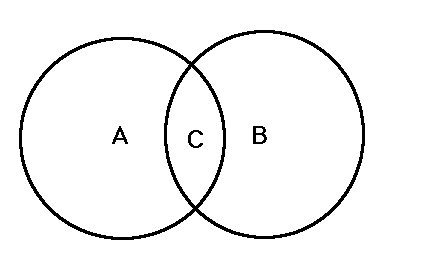
Being strewn by circumstance into another country, especially in a culture as segregating as Japan, can be daunting and not always enjoyable. After the thrill of the new wears off, it's easy to get bitter about the less charming aspects of what's foreign to oneself. The result is an almost bipolar relationship with one's host country, alternating between varying extremes of love and hate. Some would say that in Japan it could be easily summed up as "we love them, they hate us."But of course, things are not so simple, nor are they so black and white.
The more one gets accustomed to another culture, remaining a foreigner in the eyes of the host can become annoying. It's a common complaint by most foreigners in Japan (at least the ones who refuse to become charisma men). Books have been written about it. Sociologists, Psychiatrists and Anthropologists have dedicated volumes to this particular brand of underhanded racism. It would be foolish to believe that it only happens in Japan, though I dare say that here it's far more conspicuous. Institutions are built on the "us" and "them" mentality, a sore remnant of nineteenth century racialism and millenary exposition to Chinese cultural absolutism.
Walking through my local immigration office in a bid to renew my visa (which anyone can attest to as being far from easy), a poster looming over the main counter caught my attention. Colourful and cartoonish, it warned to the recent change in Japanese immigration laws. Indeed, as from 2003 these were tightened to secure an even more draconian approach to illegal foreign workers (and, one could argue, legal ones, too). Bigger fines, longer prison sentences, more paperwork and necessary proof of labour - all these items underlined in pink, with a somewhat stylish lettering and surrounded by horrid childish drawings. At the bottom, a smaller font paragraph claimed that "these laws are to ensure a better co-operation and understanding between Japanese people and foreigners, and to ensure a smooth transition into the effective internationalisation of Japan." It was all managerial-style wank, of course.
While illegal immigrants from poorer Asian countries abound, Japan has revered the time-honoured practice of exploitation for many centuries. Starting with the burakumin, the Japanese establishment has for centuries found ways to deprive minority groups of citizenship. The legend above is nothing but a testament to deeply-ingrained xenophobia, based on the shaky grounds of an all-pervasive national identity. The herrenvolk still lives within the labyrinthine bureaucracy of the Japanese establishment.
What is the effect of this, then, on a foreigner's ordinary life? Surely not all Japanese are racists - at least not consciously so. Yet a lifetime of being exposed to ideas of racial purity (though oftentimes stripped off its more virulent aspects), converges into feelings of uniqueness: they are not like us, therefore they cannot and will never live like us. It is common foreigner lore that one can live in Japan for decades, but still have the same conversation over and over again. Perhaps it is a natural result of believing that one is able to define a fellow human being based on where they come from. And though superficial differences may well exist at first, human beings are extremely adaptable creatures. If the outside is inevitably defined by the inside, isn't there a point where the two must inevitably dissolve?
Saturday, October 29, 2005
Thursday, October 27, 2005
 The Better Man
The idealistic fires of my anarcho-syndicalist side have been all but fanned as of late. With every passing day, I get more and more convinced of the futility of money for the sake of it.
I just finished reading a short story by Tolstoy called "The Death of Ivan Illych," and it really struck a nerve with something going around my head lately. At the risk of making this sound like a book report, the character is a lawyer who dies lonely in a rich house, accompanied by his estranged wife and his selfish children, his only pleasure resting his feet on an innocent peasant boy's shoulders to relieve the agony of the illness eating away his life. (It's pretty evident that the Russian realists weren't the chirpiest birds in the nest). And yet, the story is an examination of how Illych's life was over long before that, overdosing on an immoral cocktail of wealth, greed and power. In fact, the character is only redeemed after he acknowleges that his life, albeit pleasant, was not a good one. "But oddly enough none of those best moments of his pleasant life now seemed at all what they had seemed at the time," explains Tolstoy at the turning point of Ivan's illness, who begins a much belated introspection only after admitting to himself that he will die soon. It might be a tad extreme and melodramatic, but who can say this scenario is strange to those who consciously live at the expense of others, forgoing virtue for social standing and a facade of success?
Then there's a Pearl Jam song I really like, mostly due to the lyrics (but also because of its cooky ukelele rhythm):
"Sorry is the fool who trades his soul for a corvette,
Thinks he'll get the girl he'll only get the mechanic.
What's missing? He's living a day he'll soon forget.
That's one more time around. The sun is going down,
The moon is out but he's drunk and shouting,
Putting people down. He's pissing. He's living a day he'll soon forget.
Counts his money every morning. The only thing that keeps him horny.
Locked in a giant house that's alarming. The townsfolk they all laugh.
Sorry is the fool who trades his love for hi-rise rent.
Seems the more you make equals the loneliness you get.
And it's fitting. He's barely living a day he'll soon forget.
That's one more time around and there is not a sound.
He's lying dead clutching Benjamins, never put the money down.
He's stiffening. We're all whistling a man we'll soon forget."
Lastly, there's this arsehole engineer I met at Jeff's bar the other night. He asked me about my job, and when I told him I was a teacher he gave me the most disgustingly condescending smirk. "Oh, so you're still doing /that/" he said, as though I was a complete loser for not getting an 'important' job at a so-and-so 'respectable' company like his. I really felt like bashing his teeth in. I just smiled, however, and proceeded to explain how great it feels to see your students learn things, and how teaching can be a million times more fulfilling than sitting at a desk all day, just so you can get bits of paper to exchange for shiny trinkets.
So much for unimportant jobs.
Sunday, October 23, 2005
 The Untree
6:51am. The early minutes after a turbulent few hours of those introspective nights, when one tumbles and turns and pretends to sleep, unconsciously conscious of the changing shades of dawn, clamped away from stupor by delusions of self-absorbed paranoia spawned by imaginary turntables and Marcel Duchamp inside Magritte's non-pipe.
Yesterday I had bought myself a set of watercolours and spent some time making an uninteresting picture of a badly drawn tree. Leafless, it sucks earth from the ground, as though the two were a single peculiar entity, protruding from the brown soil like a pimple or a nipple, or a rotting cauliflower. Among the inexplicable hues there are infinitesimal hints of red and green. The branches are black, and the trunk is of sandy sienna – hence its resemblance to the dirt below. The sky remains unpainted. In my mind it blends with the leaves -the ones that have fallen- and earth and firmament are one; the moon exclaims "Bismillah!" and the tree remains but that, standing passive in the centre and gaping back at me.
So, despite the pretentiousness of baptism, it is now called "the Untree," homage to the silhouette of a Danish madman reflected in the shadows of a cave. It is my tricolour flag of brown, browner and yellow screaming chants of revolution, and the fifty stars that are not there represent all of mankind's sins: sleepiness, insomnia, unruly hair, boils in the mouth. And then, when the bell rings seven times, one will suddenly remember that the sky lingers unpainted and that suddenly it's time for breakfast and that the tree that stands so tall and flat in grainy paper is not, and never was, a tree.
Friday, October 21, 2005
The Perfect Two
When I was about ten, we had these multicoloured copybooks for different school subjects, all with the school insignia on the front. Science was orange, social studies was blue, Spanish was red, English, yellow, and maths was green. Of all these, it was usually my maths copybook which would be the most disorderly, numbers jotted down everywhere in all kinds of pens and pencils - I had a penchant for losing them all the time (and I've kept it ever since). The pages, originally pristine white with subtle light-blue lines, would fall like city snow, showing the murky grayish-brown marks left by a thousand erasers gone astray. My green copybook was, in short, a complete mess.
That is why it was so strange when the perfect two decided to visit me there.
One day, in between many dishevelled calculations (fractions, I think), the teacher was writing some exercises on the board when it happened. Her numbers were not particularly beautiful -in fact, not even memorable enough for me to remember precisely. They were, however, legible and well-crafted. And compared to my own, they were like the roof of the sixteenth chapel is to crass graffiti on a restaurant napkin. Her numbers were purely functional, no more and no less, written with that purpose in mind and living for it to the bitter, eraserbound end.
This one number, however, was different. I would later come to believe its origin was only halfway in the reality of perfect logic, while its other feet were half set in alternate dimensions of universal inspiration. And there was no prelude either, no fanfare, no sudden bout of artistic inspiration: it just happened, quickly and destitute of thought, much like every other answer in my maths exercises. As I squiggled along my increasingly incorrect fractions, the two came out of nowhere. Before I knew it, it posed itself in my grotesque green copybook, a single shining pearl within murky oceans of geometrical water.
Here stood the most perfect number two ever made by man. The main strokes were marked with calm precision, not too hard on the paper and not too soft, regular all throughout with no blemishes of tardiness or hurry. Its fancy plumage was the upper curve, arousing in its voluptuousness, yet affectionate in its sweet caresses to the paper below. The line beneath curved up, ever so slightly, in perfect balance with its sister above.
Quickly, I tried to copy it several times. "This," I thought to myself, "will be my newly adopted shape for number two." And every time I would fail. For weeks I couldn't stop thinking about it. Every time I pulled out my green copybook, I would turn the pages, holding my breath in expectant hesitation, just to admire its perfect figure one more time. Again, I would try to copy it, and every time my efforts would be foiled. Meanwhile, the perfect two just giggled back as I tried to steal away its glory, safe in the knowledge that it was the only and last perfect number to set foot on any of my notebooks, my hands too clumsy to recreate it and my mind too aware to picture it. The two was spawned from nothing, as in direct opposition to the physical laws, ex nihilo nihil est, and the very knowledge of its existence negated every possibility of its rebirth.
That green copybook stayed with me for years after its pages had run out and the fractions inside became a childish joke. Every so often it would resurface from the debris of my bedroom clutter, and when it did, I was quick to check that one page of unsurpassed dual beauty. And one day, as the copybook finally found its way to stationary heaven, the perfect two disappeared from human sight forever.
I never showed it to anyone, of course. This knowledge alone was my own possession. Beauty was only true because it was imaginary, like the mold carved faithfully in my dirty maths book. Even trying to share this would have been futile, with more than one blank stare to mar my enthusiasm.
I still think about the perfect two. And it has also tried to come back. Many times it will make a coy entrance in an unsuspected place: a receipt, a foreign bank note, a date on a chalky blackboard. But whenever it happens I realise that these are only copies, an aftershock of the original, like a cranky stone making slow ripples on a pond. All I do is compare it to the mold and I know this new version, not matter how alluring, is ultimately inferior. I glanced at perfection once, and now the real perfect two lives outside my grasp. It will live telling me that because of itself it may never be seen again, and I'll know that the blessing of its beauty was also the beauty of its curse.
Subscribe to:
Posts (Atom)